
Explore the critical insights into the labor market for frontline and essential workers, analyzing trends, wages, schedules, and the impact of legislative changes to help you attract and retain top talent.
ExploreAverage Hourly Wage Increase: Driven by pay transparency laws and a higher demand for experienced workers, the average posted hourly wage for frontline roles reached $19.84 nationwide, marking a significant rise.
Experience and Guaranteed Hours: Employers are increasingly requiring more experience and full-time positions, with indices for these requirements reaching a 2-year high above 100.
Legislative Impacts: Legislative changes, such as California's fast food wage increase (AB 1228), are contributing to volatility in wages and education requirements as employers adjust to the new minimum standards.
Remote Work: Following the Return-to-Work trend we've been seeing, Remote Work openings are down 16 points year over year and emphasis on in-person interactions for frontline employees.

To explore Talroo’s data and search findings for recruiting and hiring, use the Industry Explorer below. You can view nationwide trends or focus on specific states. Additionally, you can narrow your search by selecting industries or specific job titles. Happy searching!

The Frontline Worker Index (FWI) provides valuable data on key factors like supply and demand, job titles, wages, work schedules, education and experience requirements, and the benefits frontline workers value most. By analyzing these insights, HR professionals and recruiters can develop more effective strategies for attracting, hiring, and retaining top talent in today’s highly competitive job market.
The FWI provides insight into job seeker supply and employer demand by contrasting newly created resumes and newly created job posts.
This graph can show the different industries that are trending towards a tighter labor market, or those that might have a more difficult time hiring, and industries that are seeing an abundance of available workers.
For example, if the Healthcare – Allied Health industry is selected from the dropdown, you’ll see the following insights.
The Allied Health industry, which includes EMTs, nurses, pharmacists, and other crucial medical support staff, continues to experience a tight labor market, as demonstrated by these trends:
These indices suggest that while there has been some recovery, the number hasn’t fully rebounded from the steep dip observed from March 2023 to April 2023. The ongoing imbalance between job postings and available workers underscores the persistent challenges in staffing the Allied Health sector.
HR professionals and recruiters can take the following actions with this information:
Continuing the conversation about supply and demand from the graph above, here we can see the demand of frontline job seekers who use Talroo-associated job boards and search engines, or the things they are searching for while looking for jobs, and the supply, or the job posts provided by employers using the Talroo landscape to advertise their positions.
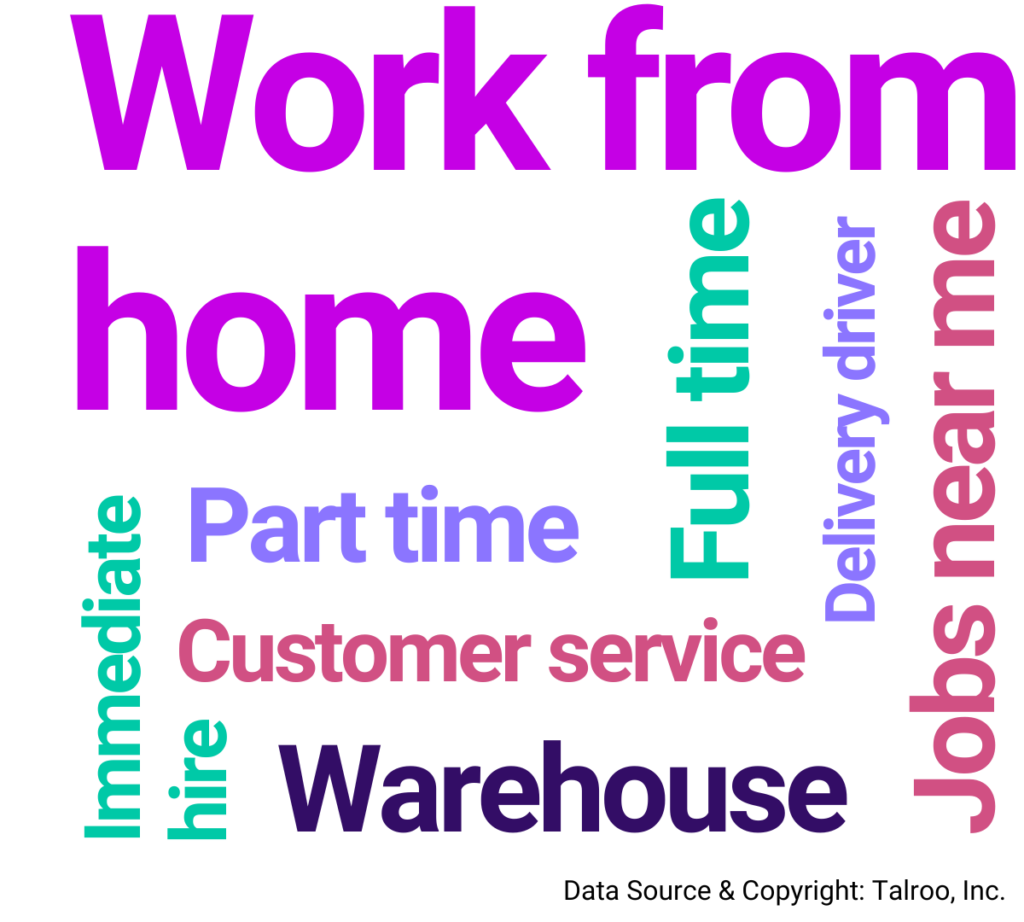
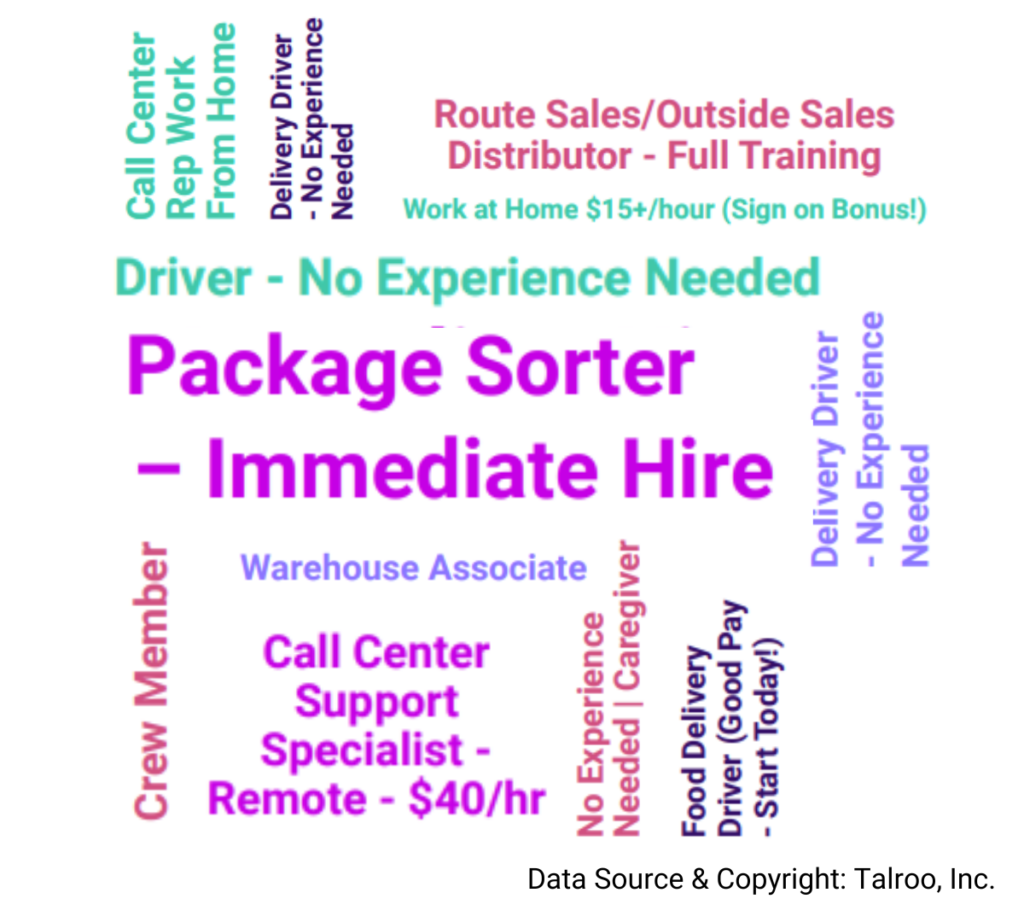
Most of the top job searches, 63%, pertain to how frontline job seekers want to work more than what they want to do. Right off the bat there’s a correlation: the top job posts all contain snippets from the top job searches and target those wants and needs from job seekers. This alignment demonstrates that understanding job seekers’ priorities, such as work-life balance, remote work options, and immediate start dates, can significantly boost the attractiveness of job postings.
Alternatively, Work from Home is by far the top query from job seekers, but that term is much less significant in terms of Employer Demand. This falls in line with another insight that will be explored in more detail in the Schedules & Hours section.
Companies that effectively address the desires of frontline and essential workers in their job descriptions are more likely to attract qualified candidates who are a good fit for their workplace culture and values.
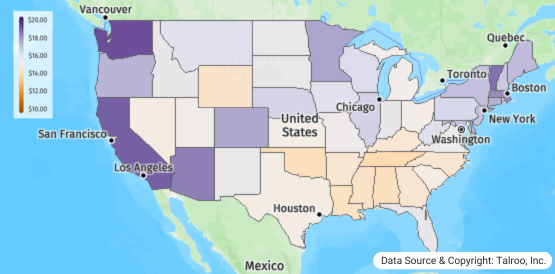
This dataset shows the average wage and sign-on bonus, when listed, for all jobs listed on the Talroo Ad Platform. Due to salary transparency laws that have been implemented in various states nationwide, there are some states that are more heavily represented in the map and final numbers than others. For instance, states like California and New York, which have stringent salary transparency requirements, contribute more data points, potentially skewing the overall averages higher. Conversely, states with less stringent or no transparency laws may have fewer listings, resulting in less representation in the dataset.
HR professionals and recruiters can leverage this dataset to make informed decisions and enhance their hiring strategies. Here are three key actions they can take:
This dataset shows the indexed number of Work from Home, Part-Time, and Full-Time positions listed by clients using the Talroo Ad Platform. While it doesn't necessarily skew the numbers, it's important to keep in mind that some positions are listed as either part-time or full-time, depending on availability or store needs.
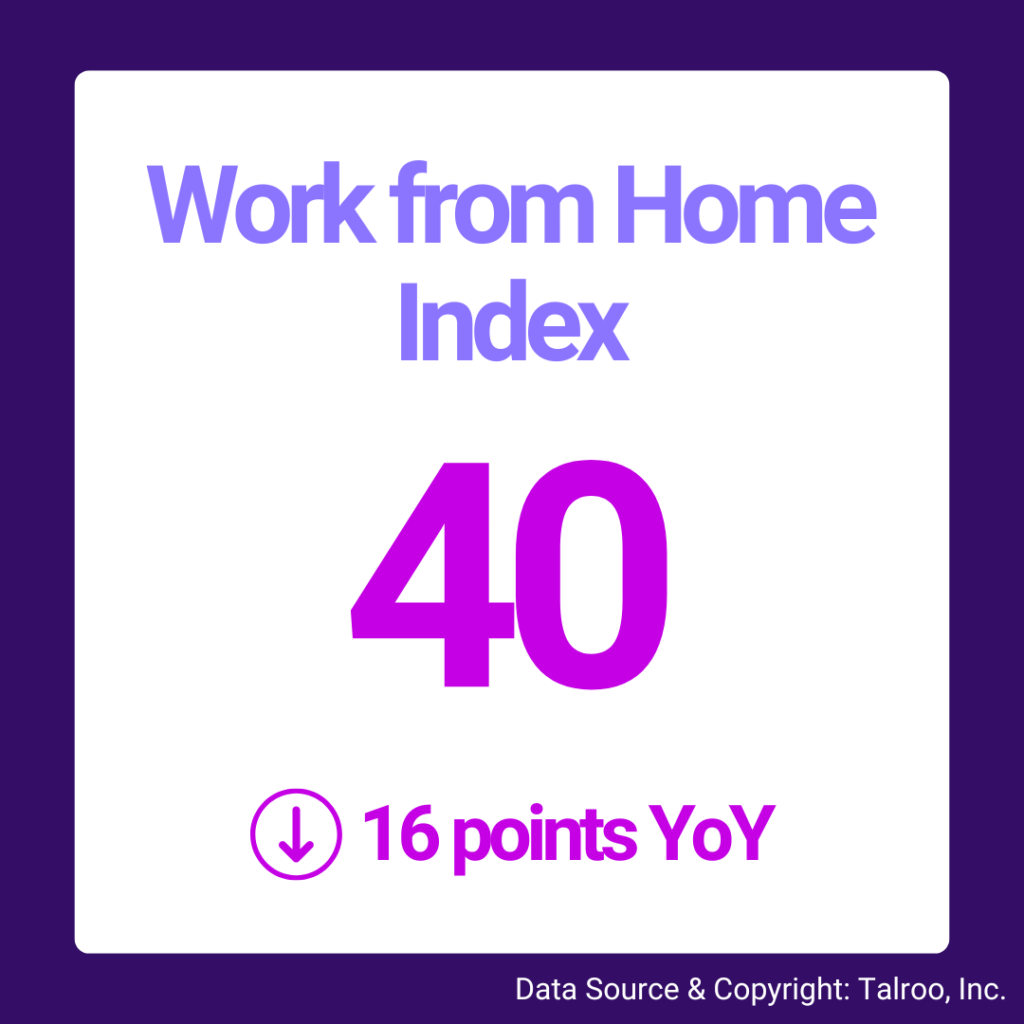
What we're seeing in the Remote Work or Work from Home index falls in line with the "Return to the Office" trend.
Knowing the Work from Home Index, Part-Time Index, and Full-Time Index for their industry, the position they're hiring for, or their state is crucial for HR professionals and recruiters. Here are three key reasons why:
This index comes from Talroo clients who list education or experience as not required for their specific job posts. For example, if a cashier position does not require a high school education or prior experience, that position would fall into this index.

Talroo data shows education and experience requirements remaining almost flat since January 2022, with each index decreasing by 9 and 4 points, respectively. However, a more indicative position for the frontline and essential worker landscape is the Cashier/Counter Person role.
Let’s look at the data:
Both indexes have remained relatively unchanged since January 2022, with "No Degree Required" up one point and "No Experience Required" staying the same.
This trend might be happening for several reasons:
Dive into the data with the graphs below to see what requirements look like in specific states or industries:
HR professionals and recruiters can stay competitive with these strategies:
Frontline and essential workers are the backbone of many industries, performing critical roles that keep businesses and services running smoothly. Understanding the benefits most important to them is crucial for effective recruitment and retention.
Key benefits for frontline workers include competitive wages, comprehensive health insurance, PTO, flexible work arrangements, and professional development opportunities. These benefits ensure fair compensation, security, work-life balance, job satisfaction, and career growth.
HR professionals and recruiters can leverage this understanding of essential worker benefits to improve their hiring and retention strategies. Here are three key actions they can take:
By focusing on these areas, HR professionals and recruiters can create a more appealing work environment for frontline and essential workers, leading to higher job satisfaction and better retention rates.
This section explores two key trends in the frontline worker market from the FWI data. Firstly, it examines the impact of California’s wage increase law on the fast-food industry, highlighting how employers and employees adapt to the new wage landscape. Secondly, it addresses the rising demand for phlebotomists, driven by demographic changes and healthcare needs, and the relative lack of legislation compared to other healthcare roles. Let’s dive in.
California’s wage increase law has significantly changed the hiring landscape for the fast-food industry. This section explores its initial and broader impacts on job postings, wage trends, and industry practices, offering insights into how employers and workers are adapting.
AB 1228, effective April 1, 2024, applies only to fast food chains with at least 60 nationwide locations, limited table service, and immediate food service.
Talroo’s data groups all food services, so while it may not be exclusive to fast food, initial impacts are still visible.
The wage increase for fast food workers in California has shifted hiring practices and wage trends. Employers are raising part-time job postings and wages to stay competitive. These changes highlight the need for competitive wages to attract and retain talent in a dynamic market.

The demand for phlebotomists is rapidly increasing due to several key factors, backed up by Talroo's proprietary data. Here’s why this demand is rising and some potential solutions to proactively address it.
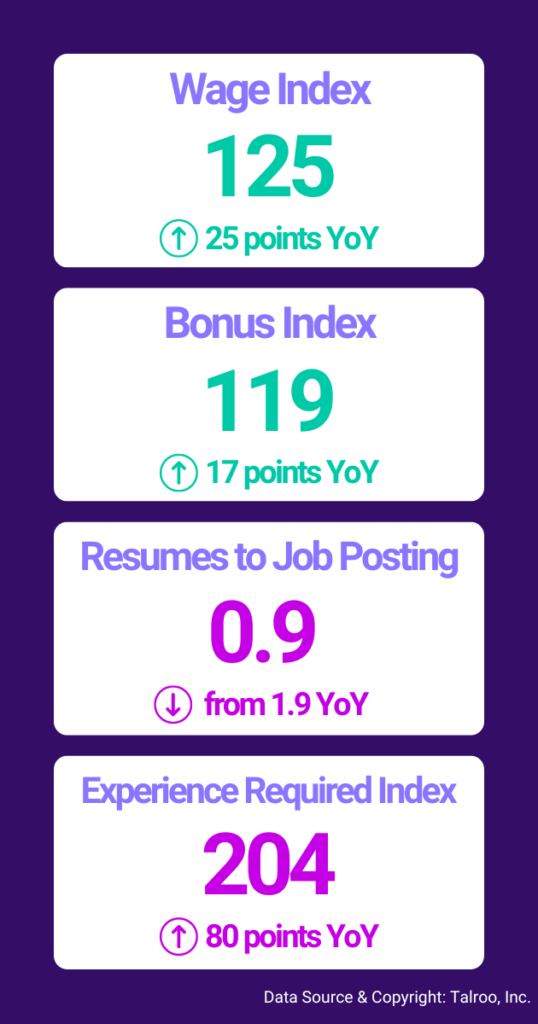
Employers are proactively increasing experience requirements and wages to stay ahead of potential new regulations, reflecting a strategic move to hire more skilled phlebotomists without relying on on-the-job training.
Talroo data indicates a big change in the phlebotomist hiring landscape. Employers can prepare for future regulations and competition by increasing wages and experience requirements, ensuring they attract and retain top talent.
If you want to explore Talroo's data and search findings to help you recruit and hire, you can below! Use the Industry Explorer here to see nationwide trends or select specific states to narrow down your exploration. Additionally, you can select industries or even specific job titles to narrow your search further. Happy searching!
View the latest FWI Report here →
View the August 2024 FWI Report here →
The Frontline Worker Index (FWI) is a comprehensive tool designed to provide insights into the labor market dynamics for frontline and essential workers exclusively. This report analyzes trends in supply and demand, job titles, wages, work schedules, education and experience requirements, and valued benefits. By examining these critical metrics, HR professionals and recruiters can develop effective strategies to attract, hire, and retain top talent in a competitive job market.Talroo processes an average of 26 million job posts every month, with over 187 million data points adding to this index directly. This extensive dataset is sourced first-party directly from Talroo, reflecting a broad spectrum of industries and geographic locations. Some job posts are comprehensive while others are less detailed; our goal is to encourage companies to be more transparent and intentional with their job posts to improve data quality and utility.The FWI reflects information from a wide range of sectors, powered by Talroo’s robust dataset and supplemented with Public Insight Data. The report includes detailed graphs and data points, offering a clear view of how different industries are managing tight labor markets and legislative changes for frontline roles. It’s important to note that our data does not reflect all positions equally; some job posts may represent a need for one hire, while others might represent a need for 1,000.Index numbers are based on January 2022, a point of relative stability in a post-pandemic world for frontline workers.This set of indices is an invaluable resource for HR professionals, recruiters, business leaders, and investors seeking to understand and navigate the complex landscape of frontline and essential workforces. It provides actionable insights that can help benchmark past and current performance, as well as forecast near-term industry trends and outlook.


