In today's competitive job market, offering standard benefits like healthcare coverage, paid time off, and competitive wages is no longer sufficient to attract and retain top talent. Employees are increasingly seeking benefits that enrich their personal lives, support their well-being, and foster professional growth. Companies that recognize and implement these enhanced benefits not only stand out as desirable employers but also cultivate a more engaged and loyal workforce.
Worthy and unique benefits also allow many organizations to level the playing field without participating in a wage-race against competitive employers. Study-after-study from organizations like the Journal of Behavioural and Applied Management, Top Employers Institute, and even Ford demonstrate that workers are willing to receive less wages for an organization that supports them with strong benefits. In fact, Ford’s 2024 study found that nearly 60% of Gen Z employees would be willing to take a 20% pay cut for benefits that prioritize their quality of life.
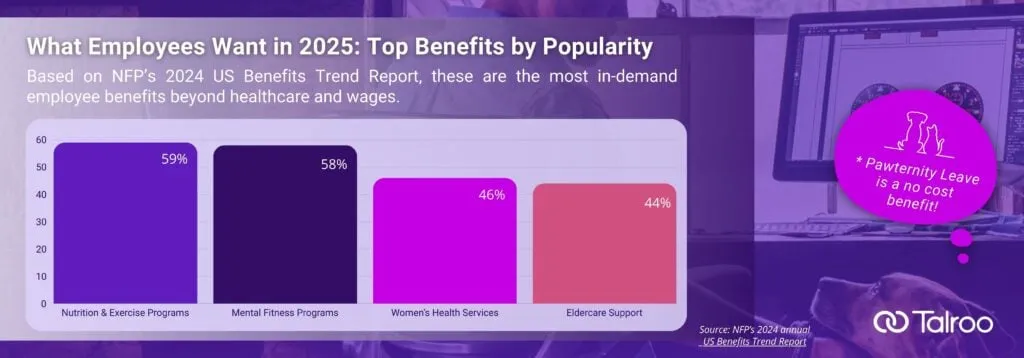
According to benefits consultancy firm NFP’s 2024 annual US Benefits Trend Report, interest in additional programs and services is high: 59% of workers are looking for nutrition and exercise programs, 58% want mental fitness programs (meditation, resiliency and stress management), 46% are interested in women’s health services and 44% are interested in caregiving for elderly or ill family members.
Better benefits doesn’t have to automatically translate to more financial investment from your organization either, there are many benefits which are low or no “cost” that are still seen as extremely valuable from employees. Let’s review a wide range of both traditional and non-traditional benefits that can help organizations support their team and compete for the top employees.
1. Comprehensive Family Support
Employees value benefits that support their families in various stages of life. Providing comprehensive family-oriented benefits demonstrates a company's commitment to its employees' personal lives.
2. Mental Health and Wellness Programs
Mental health is a critical component of overall well-being. One of the key factors in mental health for today’s workforce is the prevalence of burnout. According to data from The Society for Human Resources Management (SHRM), workers who are burned out from their work are nearly three times more likely to be actively searching for another job (45% versus 16% of those who did not report burnout). Employers that prioritize mental health create a supportive environment conducive to productivity and employee satisfaction.
3. Professional Development Opportunities
Employees are keen to grow their skills and advance their careers. Companies that invest in their employees' professional development foster loyalty and drive innovation.
4. Flexible Work Arrangements
Flexibility in how and where work is performed can greatly enhance employee satisfaction and work-life balance.
5. Unique Perks and Incentives
Offering distinctive benefits can set a company apart and make it more attractive to potential hires.
6. Integrating Benefits into Job Descriptions
Effectively communicating these benefits in job descriptions is crucial for attracting top talent. A well-crafted job description that highlights unique benefits can differentiate a company from its competitors.
Beyond ‘Basic’ is Going to Bring in Better Candidates
Incorporating meaningful benefits beyond the standard offerings is essential in attracting and retaining the best employees. By understanding and addressing the diverse needs of the modern workforce, companies can create a supportive and enriching environment that not only draws top talent but also fosters long-term loyalty and engagement. Clearly articulating these benefits in job descriptions ensures that potential hires are aware of the unique advantages your company offers, setting the stage for a mutually rewarding employment relationship.
Tagged with
Recent Posts
Categories
Tags