In the evolving landscape of talent acquisition, skills-based hiring has emerged as a pivotal strategy, emphasizing candidates' actual competencies over traditional credentials. This approach not only broadens the talent pool but also enhances the precision of hiring decisions.
However, a significant challenge within this paradigm is accurately defining job requirements—specifically, distinguishing between core and transferable skills. For instance, when hiring for a frontline customer service role, is experience with a specific point-of-sale system essential, or is general proficiency with any sales software sufficient? Addressing such questions necessitates a collaborative effort between recruiters and hiring managers to ensure job descriptions and assessments align with real job needs.
Understanding Core vs. Transferable Skills
To refine skill identification, it's crucial to differentiate between core and transferable skills:
Recognizing this distinction enables recruiters to identify which skills are non-negotiable and which can be learned on the job, thereby expanding the candidate pool without compromising on job performance.
Collaborating with Hiring Managers
Effective collaboration between recruiters and hiring managers is essential to accurately define job requirements:
Use Functional Competency Frameworks
Competency frameworks provide structured models that define the specific skills, knowledge, and behaviors required for a role:
By adopting competency frameworks, organizations can create a clear benchmark for evaluating candidates, leading to more objective and effective hiring decisions.
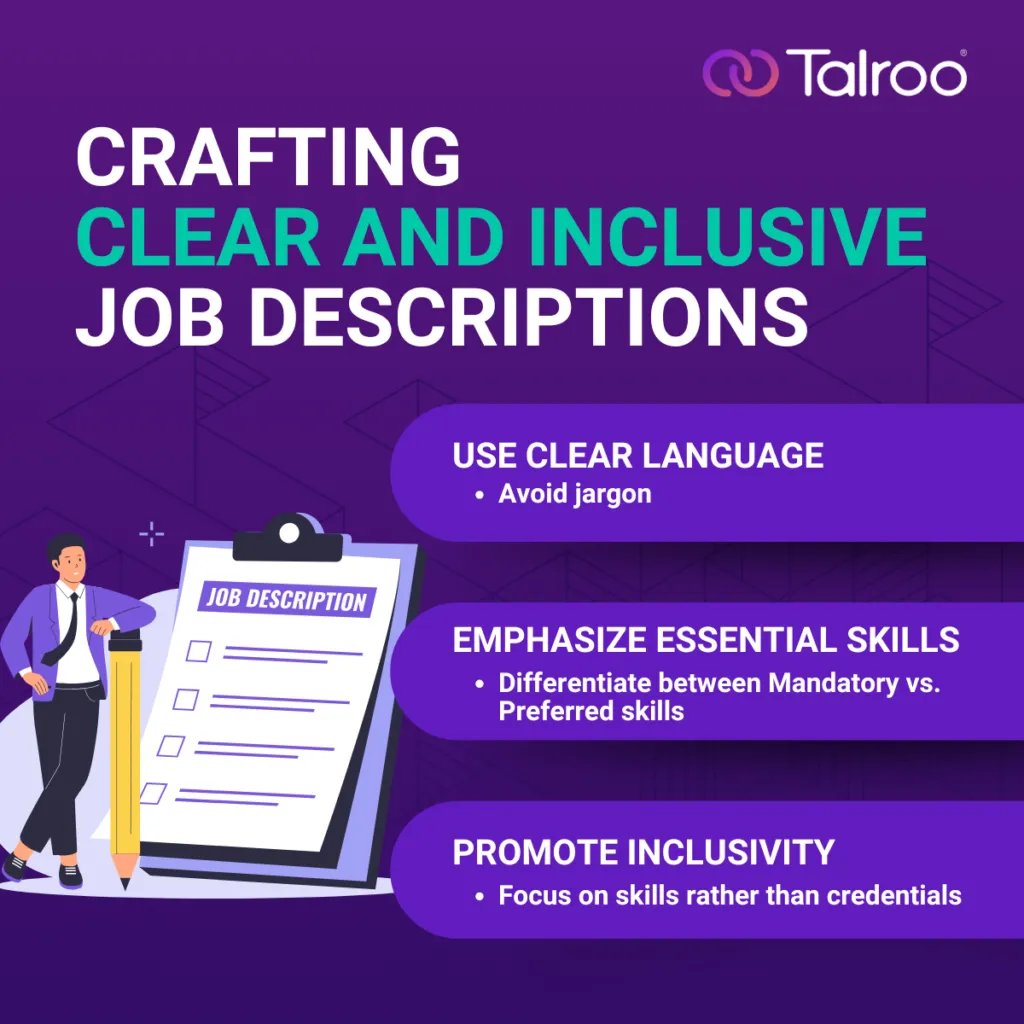
Crafting Clear and Inclusive Job Descriptions
Transparent and well-structured job descriptions are vital in attracting the right candidates. They should be regularly updated and evaluated to ensure that older job postings are accurate. There are three effective ways to do so:
Well-crafted job descriptions not only attract a diverse range of applicants but also set clear expectations, facilitating a smoother recruitment process.
Aligning Assessments with Real Job Needs
Having the tools to evaluate candidates is not only helpful to assess skills, it can also help ensure that assessments accurately reflect job requirements. In order to do so, consider the following:
Aligning assessments with job needs ensures that candidates are evaluated on relevant criteria, leading to better hiring outcomes.
Expanding Talent Pools through Refined Skill Identification
By accurately defining job requirements and focusing on essential skills, recruiters can significantly broaden their candidate reach. Recognizing transferable skills enables organizations to consider candidates from a wide range of backgrounds, enriching the talent pool with individuals who bring fresh perspectives and diverse experiences.
This approach also enhances diversity and inclusion. By shifting focus away from traditional credentials and emphasizing skills instead, recruiters can help reduce unconscious bias and create more equitable hiring practices. Skills-based hiring opens doors for individuals who may have been overlooked due to non-traditional career paths or educational backgrounds.
Additionally, clearly aligning candidates’ skills with job requirements improves retention rates. When new hires are well-matched to the demands of the role, they are more likely to succeed, feel satisfied in their positions, and stay with the company longer.
Ultimately, a strategic and thoughtful approach to skill identification does more than fill open roles—it builds a stronger, more adaptable workforce and supports long-term organizational growth.
Conclusion: Success in a Competitive Job Market
In the shift towards skills-based hiring, the ability to accurately define job requirements is paramount. Through collaboration with hiring managers, the use of competency frameworks, clear job descriptions, and aligned assessments, recruiters can effectively distinguish between core and transferable skills. This approach not only expands the talent pool but also enhances the accuracy and fairness of hiring decisions, ultimately contributing to organizational success in a competitive job market.
Tagged with
Recent Posts
Categories
Tags