Recruitment marketing plays a critical role in attracting top talent, especially in competitive hiring markets. Whether you are launching a new employer brand, filling hard-to-recruit roles, or scaling up seasonal hiring, finding the right marketing partner can make or break your talent acquisition strategy. A well-crafted Request for Proposal (RFP) is the first step toward that success.
Creating a recruitment marketing RFP may sound straightforward, but to get quality responses from top-tier vendors, you need to define your goals clearly and structure your request with precision. This guide walks HR and talent leaders through the key considerations, elements, and questions to include in your recruitment marketing RFP, along with tips for evaluating proposals to make the best decision for your organization.
Step 1: Define Your Objectives and Scope
Start with a clear understanding of why you need recruitment marketing support. Are you struggling with brand awareness among job seekers? Is your current solution simply not delivering enough quality applicants and hires? Are you expanding into new markets or targeting hard-to-fill positions?
Define the specific objectives you want to achieve through the RFP process. Common recruitment marketing goals include:
Clarify the scope of the engagement. Will this be a one-time campaign or an ongoing partnership? Focus on the core of what matters to you: is it getting better (or more) new hires, do you need full-service support (strategy, creative, media, and analytics), or just a portion, such as job ads, social recruiting, or content creation?
Without clear goals and scope, you risk attracting the wrong partners or getting proposals that do not align with your true needs.
Step 2: Assess Internal Resources and Gaps
Before you begin drafting your RFP, take a close look at your internal capabilities. This will help you determine what type of vendor you need and what services to prioritize.
Ask yourself:
Understanding these gaps will ensure that the vendor can complement your team effectively rather than duplicate efforts or leave you short-staffed in critical areas.
Step 3: Include Key Elements in the RFP
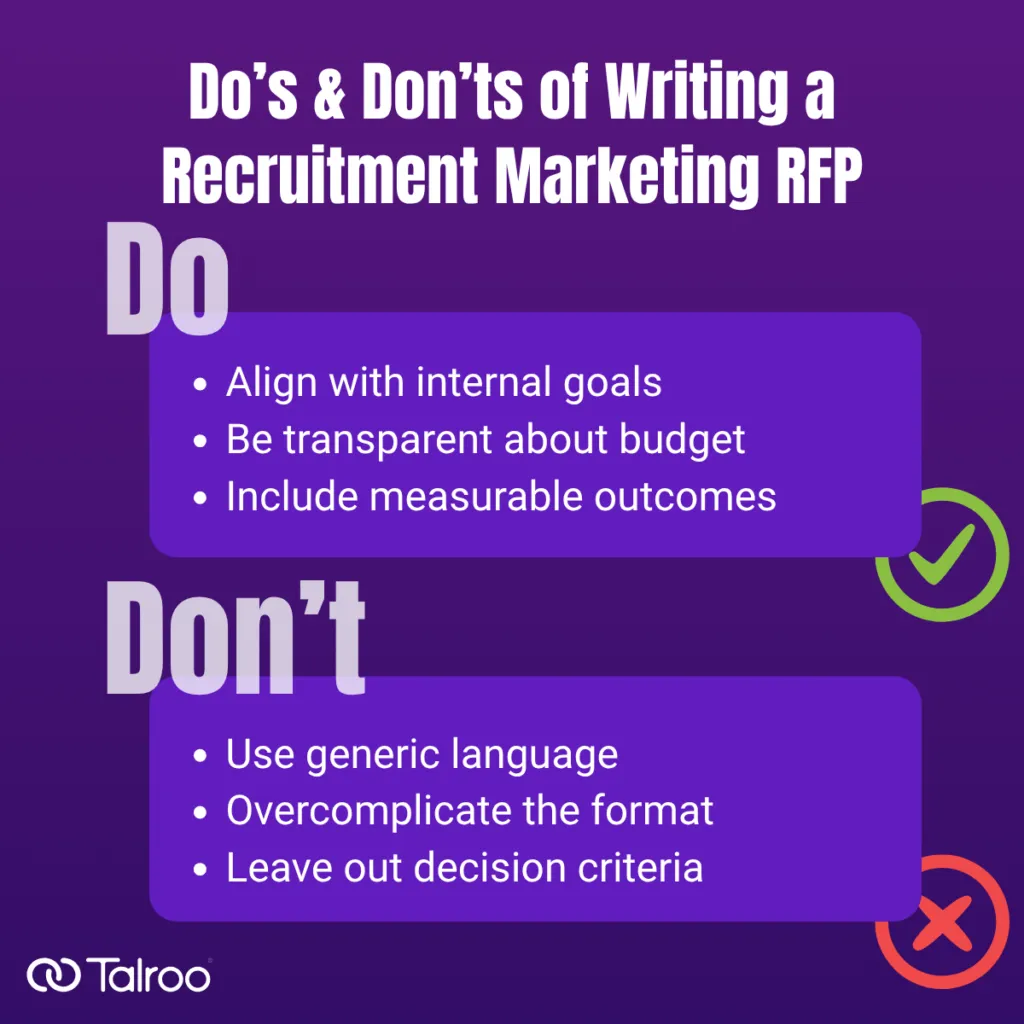
To receive quality proposals, your RFP must be structured, informative, and transparent. Include the following elements:
Step 4: Ask the Right Questions
Asking targeted questions can reveal a lot about how a vendor thinks, how they work, and whether they will be a true partner in achieving your goals.
Consider including questions such as:
These questions go beyond surface-level capabilities and get to the core of how a vendor will support your organization strategically and tactically.
Step 5: Evaluate Proposals with Purpose
Once proposals start coming in, resist the urge to jump to the pricing page first. A low-cost vendor may not deliver the strategy or creativity you need, while a high-cost one may be out of step with your culture or priorities.
Set up a clear scoring rubric based on the evaluation criteria outlined in your RFP. Common categories to score include:
Consider assembling a review committee that includes stakeholders from HR, marketing, and operations. Use scorecards to guide objective evaluation and facilitate a discussion about each proposal’s strengths and weaknesses.
It can also be helpful to schedule finalist presentations or Q&A sessions. This gives vendors the chance to elaborate on their proposals and gives you a sense of how they communicate and collaborate.
Step 6: Think Long-Term
Even if your current need is project-based, consider whether the vendor could be a long-term partner. Recruitment marketing is not a one-and-done effort. Having a trusted partner who understands your brand, workforce, and business needs can bring compounding returns over time.
Ask vendors how they approach long-term client relationships, what support they offer after a campaign ends, and how they stay current with recruitment marketing trends. Choosing a vendor who can grow with you will save you from having to start the RFP process again in six months.
Final Thoughts on Your Recruitment Marketing RFP
A recruitment marketing RFP is more than a procurement document. It is an opportunity to define your hiring goals, explore new ideas, and set the foundation for a strategic partnership that can transform your talent acquisition efforts.
By clarifying your objectives, identifying your internal gaps, asking thoughtful questions, and evaluating responses with a clear rubric, you will attract the right partners and get proposals that are tailored to your unique challenges.
Take the time to get it right, and the payoff will be a stronger employer brand, smarter recruitment strategies, and better hiring results.
Tagged with
Recent Posts
Categories
Tags