Hiring managers and recruiters all want the same thing: the right talent, in the right role, at the right time. But when it comes to measuring hiring speed, things get murky. Ask five recruiters to define time to fill, time to hire, or time to start, and you’ll likely hear five slightly different answers.
According to recent data, the global average time to hire is 44 days and the average interview process alone takes about 23 days. Compounding matters, top candidates tend to vanish fast: many are off the market in just 10 days.
Those stats aren’t just numbers. They highlight how small delays add up. A slow hiring process can cost you great candidates, waste recruiter bandwidth, and leave teams understaffed for longer. That’s why it’s crucial to not only measure how long you take to hire, but to break that timeline into meaningful segments.
That lack of consistency makes it harder to track progress, identify bottlenecks, and forecast workforce needs. To improve recruiting outcomes, we need clarity. Let’s break down the three most common metrics—time to fill, time to hire, and time to start—and look at how they work together to tell the full story of your hiring process.
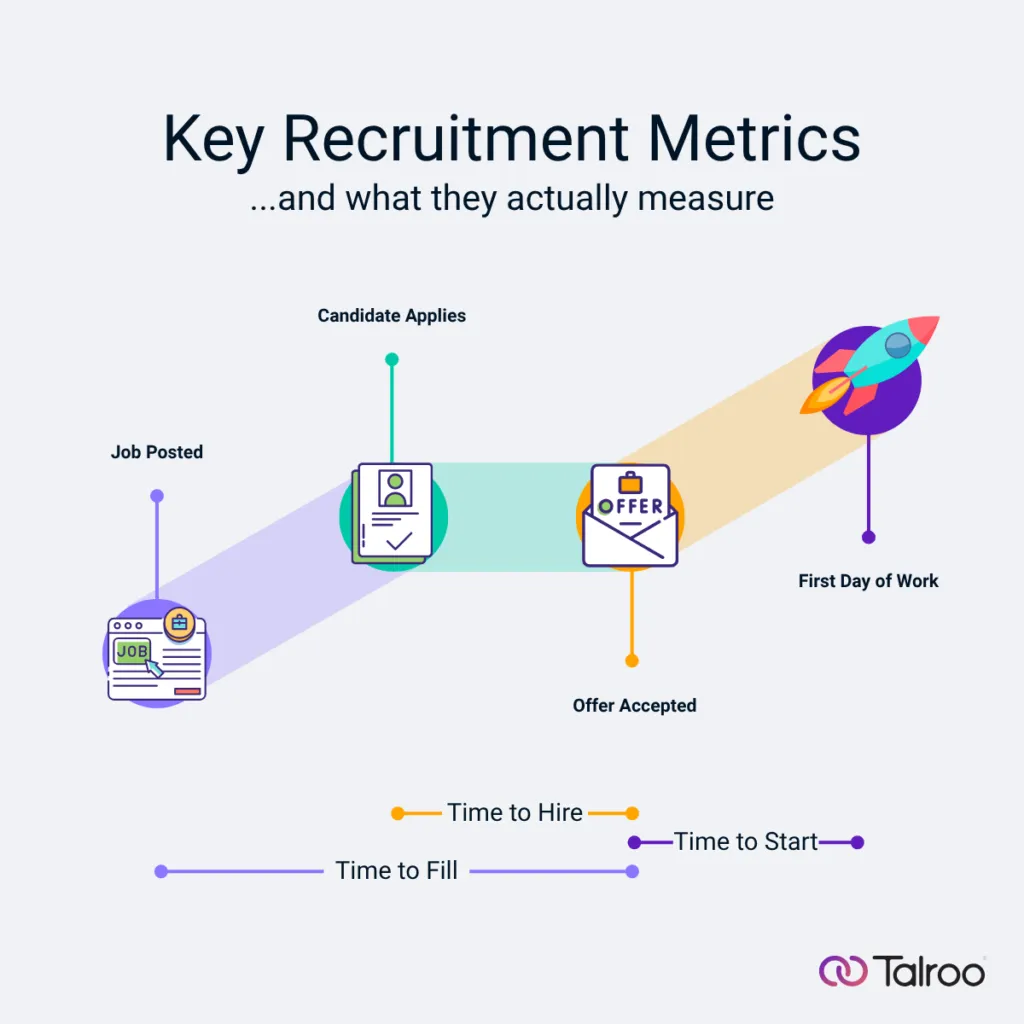
What Is Time to Fill?
Definition: Time to fill measures the total number of calendar days it takes to fill an open role. It begins when a job requisition is approved or the job is posted, and it ends when a candidate accepts the offer.
Why It Matters:
How to Calculate It:
Time to Fill = Date candidate accepts offer – Date job requisition is approved (or posted)
Example: If a role is approved and posted on March 1 and the candidate accepts on March 25, the time to fill is 24 days.
What Is Time to Hire?
Definition: Time to hire zooms in on the candidate journey. It measures the days between when a candidate enters the pipeline—by applying, being referred, or being sourced—and when they accept the offer.
Why It Matters:
How to Calculate It:
Time to Hire = Date candidate accepts offer – Date candidate applies (or is sourced)
Example: If a candidate applies on March 10 and accepts on March 25, the time to hire is 15 days.
What Is Time to Start?
Definition: Time to start measures the gap between when a candidate accepts the offer and when they officially begin work.
Why It Matters:
How to Calculate It:
Time to Start = Candidate’s first day of work – Date candidate accepts offer
Example: If a candidate accepts an offer on March 25 but doesn’t begin until April 15, the time to start is 21 days.
Comparing the Three Metrics
It’s easy to confuse these measures because they overlap. Think of them as nested timelines:
Here’s how they work together:
MetricStartsEndsFocus AreaTime to FillJob approved/postedOffer acceptedOrganizational efficiencyTime to HireCandidate applies/is sourcedOffer acceptedCandidate process speedTime to StartOffer acceptedFirst work dayOnboarding and readiness
Why the Differences Matter
Understanding the distinctions helps you diagnose problems:
How to Use These Metrics Effectively
Example: Diagnosing Delays
A useful case comes from SmartRecruiters’ 2025 Retail Benchmark Report, which shows how some retail companies improved hiring speed in high-volume roles.
Before Optimization:
After Changes:
Retail, especially high-volume roles, tends to have much faster Time to Hire compared with many other industries. Even in the same company, improvements to specific stages (candidate screening, offer acceptance windows, automating post-offer logistics) can deliver large reductions. Frasers Group’s cut from 23 → 9 days is a strong example.
Final Thoughts: Track All Three Metrics
Time to fill, time to hire, and time to start each offer valuable insights on their own. But together, they provide a 360-degree view of your hiring process, from job approval to day one.
Tracking all three helps you:
In today’s competitive labor market, speed and efficiency aren’t optional—they’re a strategic advantage. By defining, measuring, and improving these three metrics, recruiters and employers can move from reactive hiring to proactive workforce planning.
If you enjoyed this article, you might also like:
Must-Have Recruiting Metrics to Show Off to Your Boss | Talroo
Recruiting Metrics: Applicant and Interview to Hire Ratios | Talroo
Recent Posts
Categories
Tags