
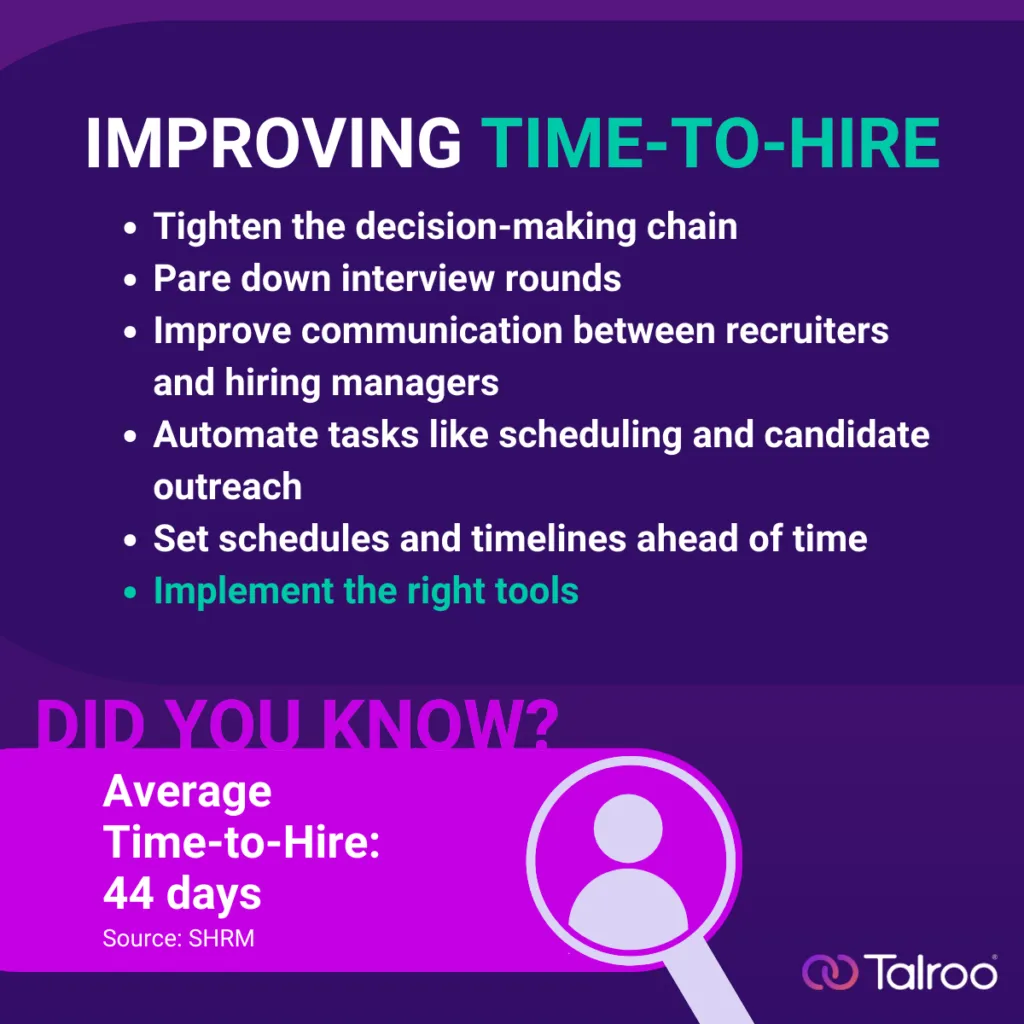
In today’s competitive talent market, a sluggish hiring process doesn’t just delay growth—it costs you top talent. Research shows that the best candidates are off the market in just 10 days, yet the average time to hire in the U.S. exceeds 44 days for many roles. So why is your hiring pipeline stuck in slow motion?
Spoiler alert: it goes deeper than “good people are hard to find.” More often than not, the biggest hiring delays come from internal bottlenecks—many of which are entirely within your control.
Let’s break down the most common causes of a slow hiring process and, more importantly, how to fix them.
1. Lengthy Approvals and Decision-Making Chains
The Problem: Before a job posting even sees the light of day, it often sits in a purgatory of approvals—from HR to department heads to finance and back again. Later in the process, once interviews are done, hiring decisions can stall for days (or weeks) as stakeholders deliberate endlessly.
The Fix:
2. Too Many Interview Rounds
The Problem: Interviewing is essential—but there's a fine line between being thorough and wasting everyone’s time. Candidates often face multiple rounds, panel interviews, take-home assignments, and cultural fit meetings, all while the hiring team debates endlessly over minor preferences.
The Fix:
3. Inefficient Communication Between Recruiters and Hiring Managers
The Problem: Recruiters and hiring managers often operate on different wavelengths. A recruiter sources candidates based on a job description, only to hear, “That’s not quite what I’m looking for.” Feedback loops are slow, unclear, or nonexistent.
The Fix:
Related: How Recruiting Teams Are Using AI to Speed Time-to-Hire
4. Manual and Time-Consuming Administrative Tasks
The Problem: Scheduling interviews. Chasing down feedback. Creating offer letters. Entering candidate data across multiple platforms. All of this adds up to hours of manual labor that drags down the hiring timeline.
The Fix:
Related: How to Reduce Drop-Off Rates and Speed Up Screening to Improve Time to Hire
5. Outdated Technology or Lack of Tools
The Problem: Still relying on spreadsheets, email, and outdated software to run your recruiting? That might be the biggest culprit in your slow hiring process. Legacy systems aren’t built for speed—or scale.
The Fix:
6. Lack of Clear Timelines and Accountability
The Problem: Without clear deadlines, hiring can drag indefinitely. Candidates go cold. Hiring teams lose urgency. And before you know it, you’re back to square one.
The Fix:
7. Fear of Making the Wrong Hire
The Problem: Analysis paralysis is real. Teams drag their feet out of fear they’ll make the “wrong” choice—so they interview just one more candidate, hoping for someone better.
The Fix:
8. Recruitment Marketing and Talent Pipeline Gaps
The Problem: Even the most optimized hiring funnel can’t perform well if you’re not filling the top with the right candidates. One of the biggest silent killers of hiring efficiency is a stale or shallow talent pipeline. If you're seeing fewer applicants or constantly recycling the same candidate pool, your issue may not be process—but reach.
The Fix:
An active, engaged pipeline means you're not scrambling to fill roles—you’re drawing from a warm pool of interested, qualified candidates. That not only speeds up hiring but also improves the overall quality of your hires.
Final Thoughts: Speed Without Sacrificing Quality
Fast hiring doesn’t mean careless hiring. It means focused, efficient, and candidate-friendly. By identifying and eliminating your process bottlenecks, you can reduce time to hire without lowering your standards—and without burning out your team or scaring off top candidates.
Remember: in a market where every day counts, a streamlined hiring process is a competitive advantage. So audit your workflow, invest in the right tools, and commit to making hiring faster, smarter, and more human. Your candidates—and your future team—will thank you.
Bonus Tip: If you're not sure where to start, try mapping out your current hiring process from job approval to offer acceptance. Look for areas where tasks pile up or go dark for days. That’s your opportunity to speed things up—and get ahead.
Posted Under
Tagged with
Recent Posts
Categories
Tags